
Gas Oven Heats Up but Won’t Stay at Temperature: What May Be Wrong?

General Appliance Service • October 15, 2026

Share this article

By General Appliance Service

A gas oven that heats up but will not stay at temperature may simply be cycling normally, or it may have a problem that prevents the bake burner from recovering. Ovens do not maintain one exact temperature continuously. The concern is a repeatable, substantial heat loss: food takes much longer to cook, the burner fails to relight, or the oven cannot recover after the door opens.

What a Technician Checks When a Gas Oven Loses Heat During Baking

A technician starts by confirming the model, fuel type, and ignition design. Some gas ovens use a hot-surface igniter that glows before gas is released, while others use direct-spark ignition. Both systems can create similar baking symptoms, but they require different testing.

The oven is usually observed through preheat and several heating cycles at a moderate temperature. The goal is to determine whether the bake burner shuts off normally, calls for heat again, and reignites promptly.

A weak hot-surface igniter may light the burner during preheat but become unreliable once hot. However, a gas valve problem, spark fault, loose wiring terminal, sensor issue, or electronic control failure can look similar. Palm Coast oven and range repair can identify the actual failed component before unnecessary parts are replaced.

Normal Oven Cycling Versus a Meaningful Loss of Baking Heat

It is normal to hear the burner turn on and off during baking. The control allows temperature to drift within a range, then calls for heat to bring it back up. Opening the oven door also releases considerable heat, so recovery is not immediate.

The symptom is less normal when the oven reaches the selected setting, drops far below it, and stays cool. Pale cookies, underdone casseroles, and suddenly longer cooking times can point to a recovery problem. Clicking or attempted ignition without a flame after preheat is another warning sign.

An oven-safe thermometer can help show a pattern, but one reading does not prove a calibration issue. Watch results through several cycles and look for large, repeated swings rather than reacting to small fluctuations.

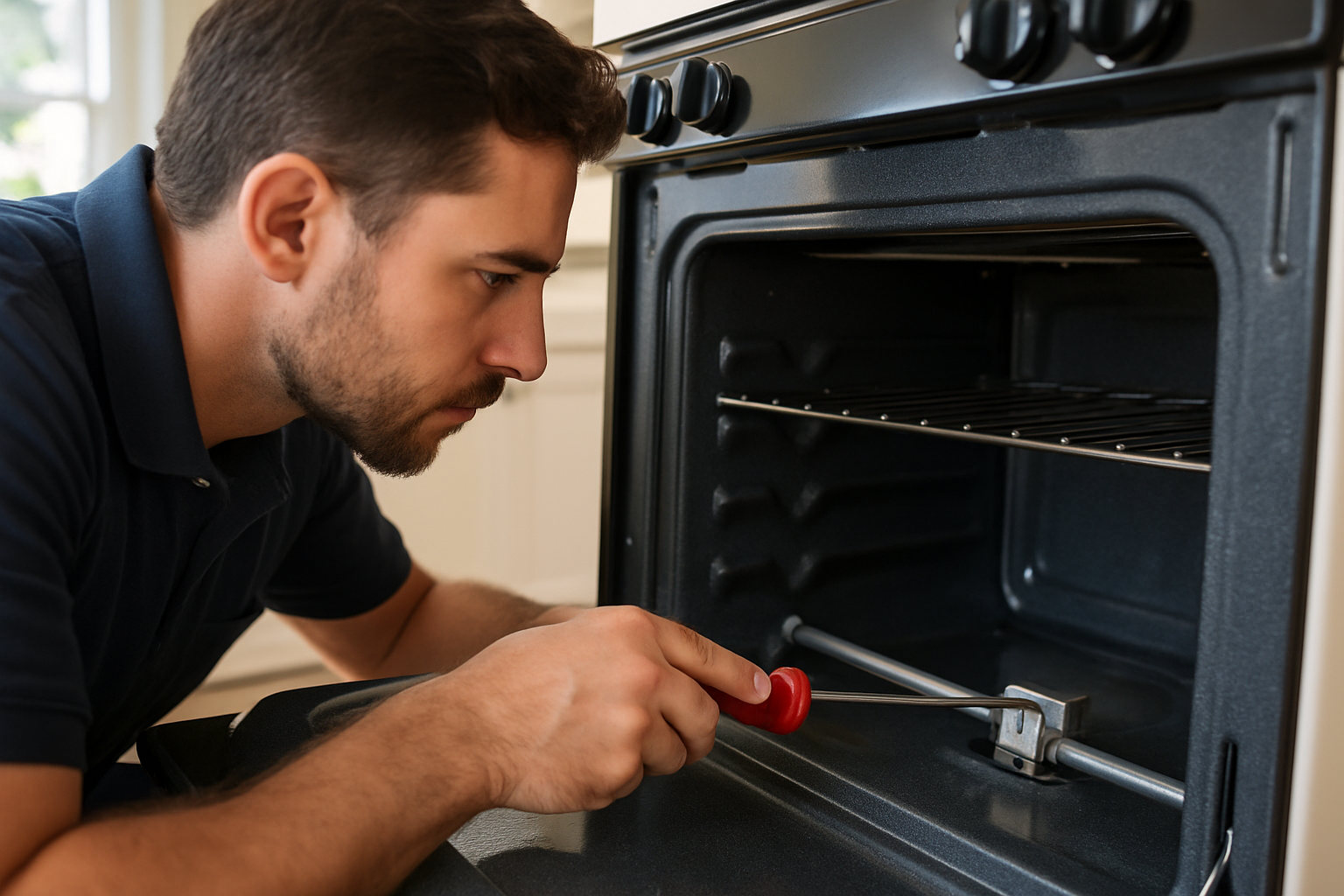
Illustrative appliance diagnostic inspection
AI-generated illustration of an appliance inspection.

Why Preheat Can Work but Temperature Recovery Fails

Preheat is only the first stage of the bake cycle. After reaching the target temperature, the control must receive an accurate sensor reading, command the burner on when needed, and successfully ignite the gas.

A weak igniter is one possible cause, but it is not the only one. A failed control board may not send the correct command, while an inaccurate sensor may send the control incorrect information. A burner that will not relight can also involve the spark system, valve circuit, wiring, flame carryover, or an ignition component that changes behavior when hot.

Broil operation provides a useful clue. If broil works but Bake will not hold temperature, the issue may be limited to the bake burner or bake circuit rather than the home’s entire gas supply. Ormond-by-the-Sea appliance repair is available for proper diagnosis of gas range and oven concerns.

What You Can Safely Check Before Calling for Service

Confirm that Bake—not Broil, Delay Start, or another mode—is selected and that the temperature setting is correct. Allow normal preheat time before judging performance. Note whether the oven preheats every time, cools only after food is added, or behaves differently in Broil mode. Record error codes, clicking, delayed ignition, or unusual odors.

Do not remove oven panels, touch an igniter, clean gas orifices, test live voltage, or adjust gas components. These tasks can create electrical shock, ignition, and gas-leak hazards.

Stop using the oven if you smell gas, hear repeated failed ignition attempts, notice a delayed “whoosh,” see smoke or sparking, or experience a tripped breaker. Turn the appliance off. If safe, close the gas shutoff, ventilate the area, and avoid flames or electrical switches nearby.

Frequently Asked Questions About a Gas Oven That Won’t Stay at Temperature

Is it normal for a gas oven temperature to rise and fall while baking?

Yes. Gas ovens cycle above and below the selected setting as the burner turns on and off. Large, repeated drops or slow recovery are not normal.

Why does my oven cool down after I put food inside?

Cold food and an open door lower oven temperature. The oven should recover afterward. Failure to recover may indicate a relighting or temperature-control problem.

Can an igniter be weak if the burner lights initially?

Yes. Some igniters work during preheat but become unreliable when hot. Testing is still needed because several other faults can produce the same symptom.

Why does broil work when bake will not hold temperature?

Broil and bake often use separate burners and components. A working broiler can suggest a fault in the bake burner, ignition circuit, wiring, or control path.

When should I stop using an oven that is not relighting?

Stop using it if there is a gas smell, repeated ignition failure, delayed ignition, a whoosh, smoke, sparking, or a suspected gas leak.

For dependable baking performance and safe gas-oven operation, arrange qualified diagnosis when the burner will not relight consistently. General Appliance Service serves Palm Coast homeowners; call (386) 359-3215 for help.

Recent Posts

By General Appliance Service • November 18, 2026
Learn why a gas dryer heats then blows cold air later in the cycle, what burner cycling is normal, and when delayed heat loss needs diagnosis.
By General Appliance Service • November 17, 2026
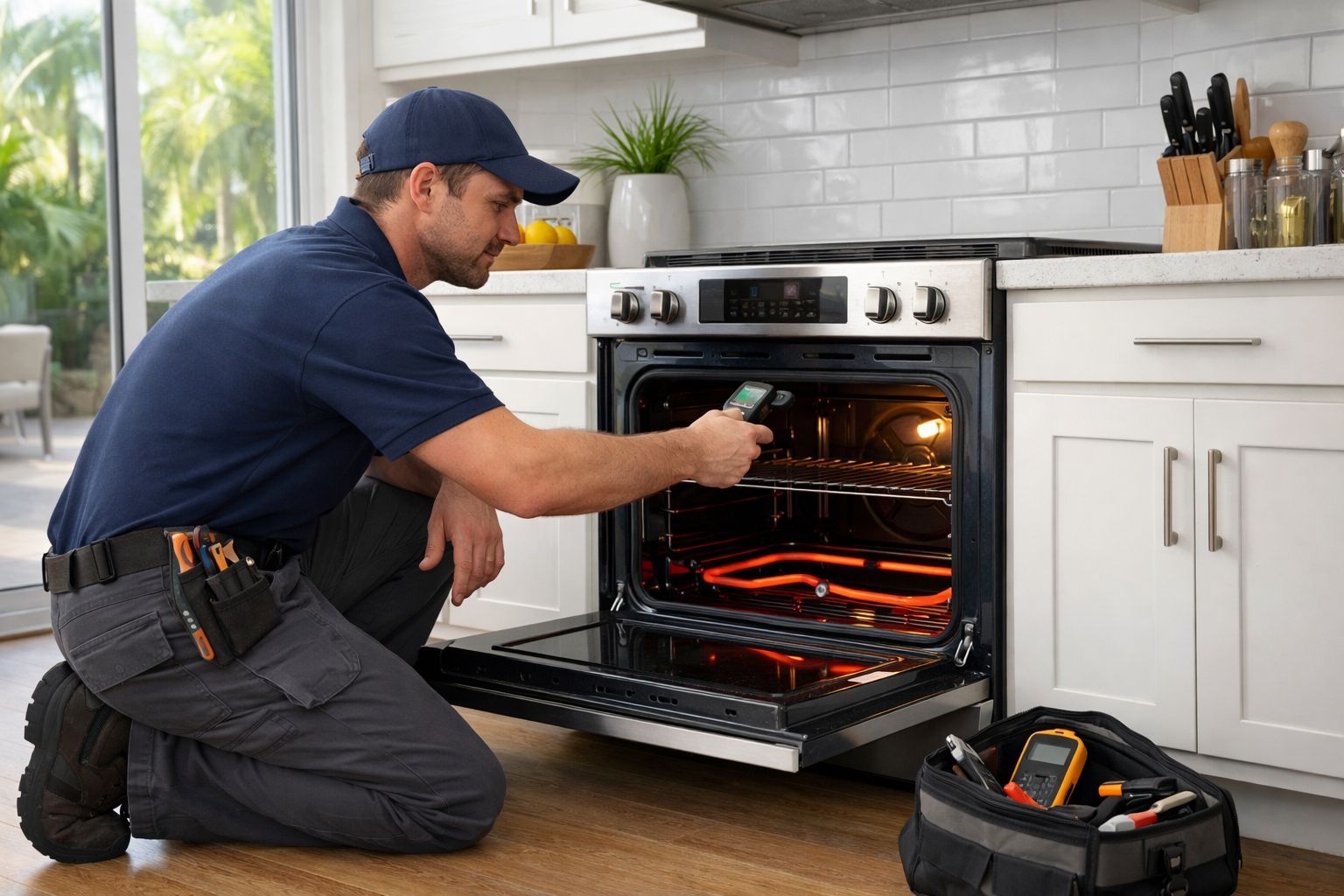
Is your electric oven taking too long to preheat? Learn what can cause slow heating, why the display may be misleading, and when professional diagnosis is needed.
Washer fills with water when turned off
November 16, 2026
Why does your washer fill with water when turned off? Learn how inlet-valve seepage differs from drain backflow, what to shut off safely, and when to call a technician.
By General Appliance Service • November 15, 2026
Learn why a front load washer smells musty after cleaning, what homeowners can safely check, and when drainage or residue problems need professional diagnosis.
By General Appliance Service • November 14, 2026
An electric stove burner that stays on high is a temperature-control problem. Learn what may cause it, what to check safely, and when to stop using the range.
By General Appliance Service • November 13, 2026
A refrigerator fan noise that stops when the door opens may involve normal fan timing, frost contact, or a failing motor. Learn what to check safely.
By General Appliance Service • November 12, 2026
A dishwasher knocking noise during the wash cycle may be caused by spray-arm contact or a wash-system problem. Learn what to check safely and when repair is needed.
By General Appliance Service • November 11, 2026
Gas dryer rattles only when heating? Learn what a heat-only buzz or chatter can indicate, what to check safely, and when to call for dryer repair.
By General Appliance Service • November 10, 2026
Learn why an oven display resets when heating, what homeowners can safely check, and when a heat-related power loss needs professional diagnosis.
By General Appliance Service • November 7, 2026
Washer leaving grease spots on clothes? Learn how detergent buildup, laundry contaminants, and internal washer problems can create dark marks.
Show More